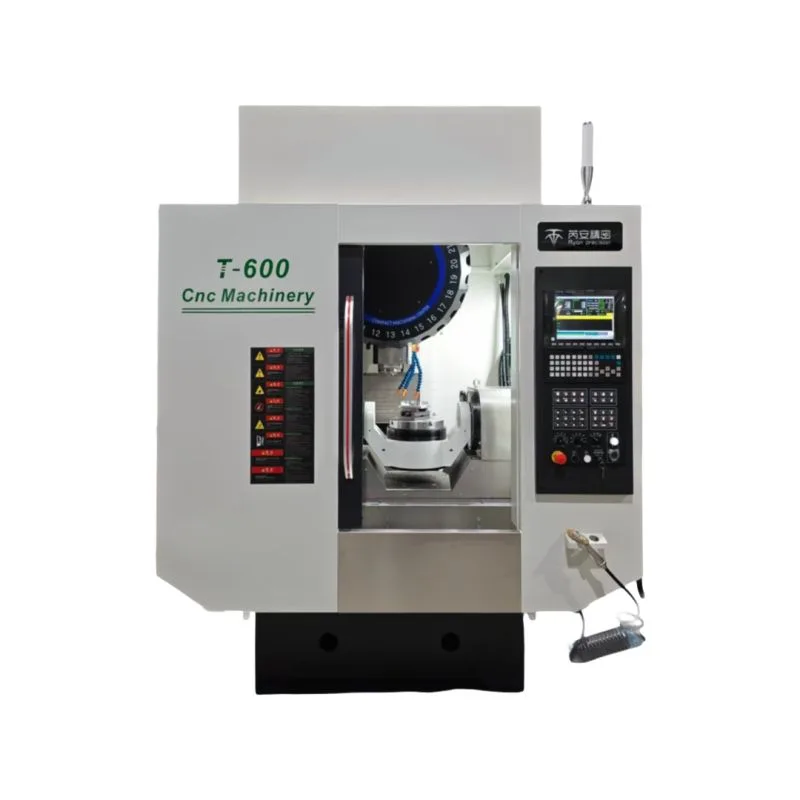

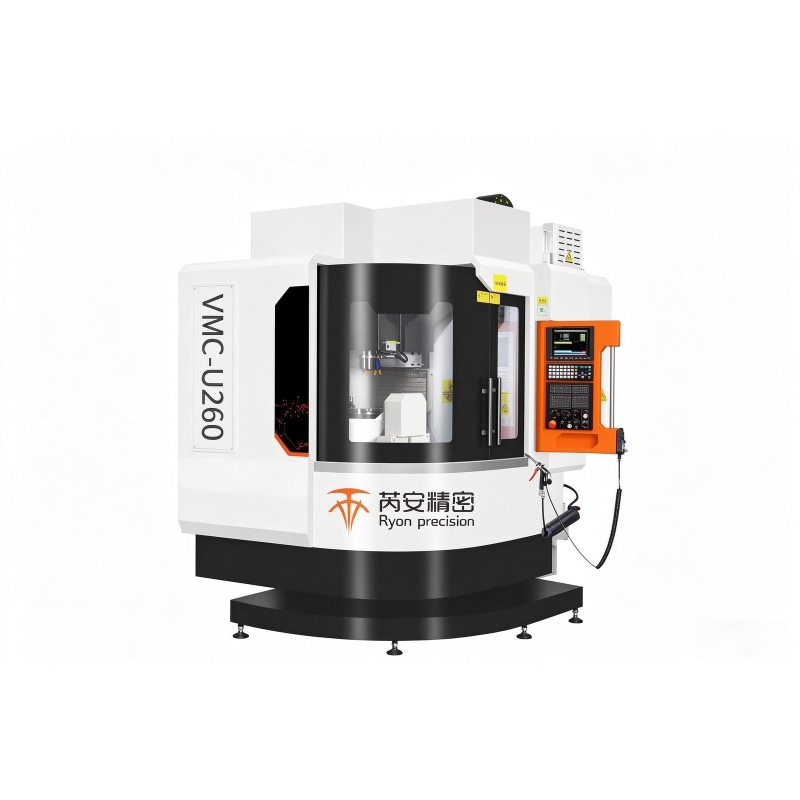
VMC-U260 Φ260 five-axis VMC · cradle A/C, BT40 12,000 rpm
- Model / Category:
VMC-U260
- Product Overview:
Small impellers and impeller covers, mould inserts and electrodes, medical components, precision valve bodies and fittings, 3C structural parts — five faces milled, drilled and tapped in one set-up.
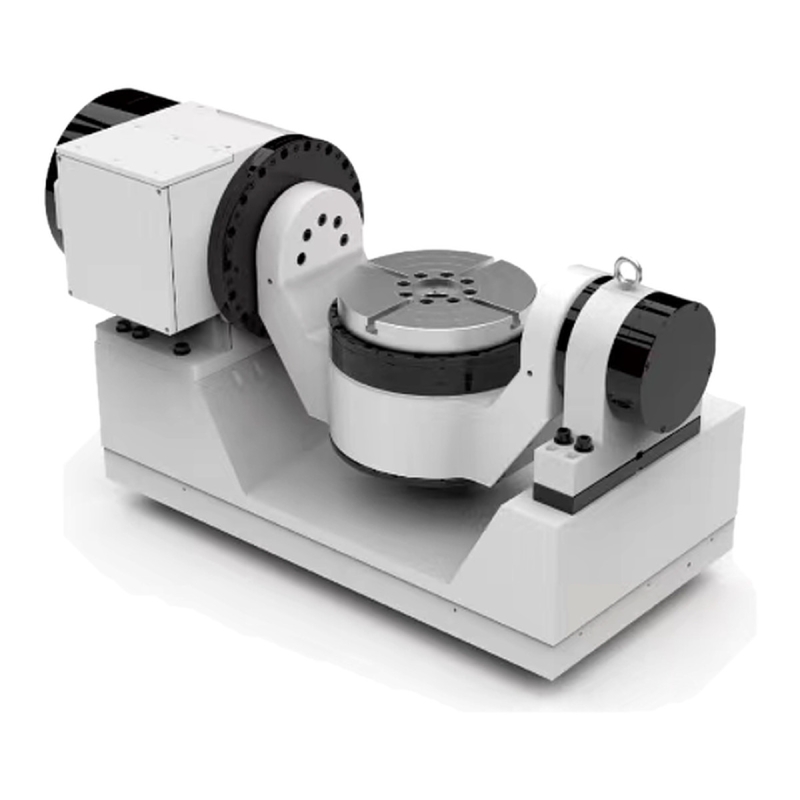
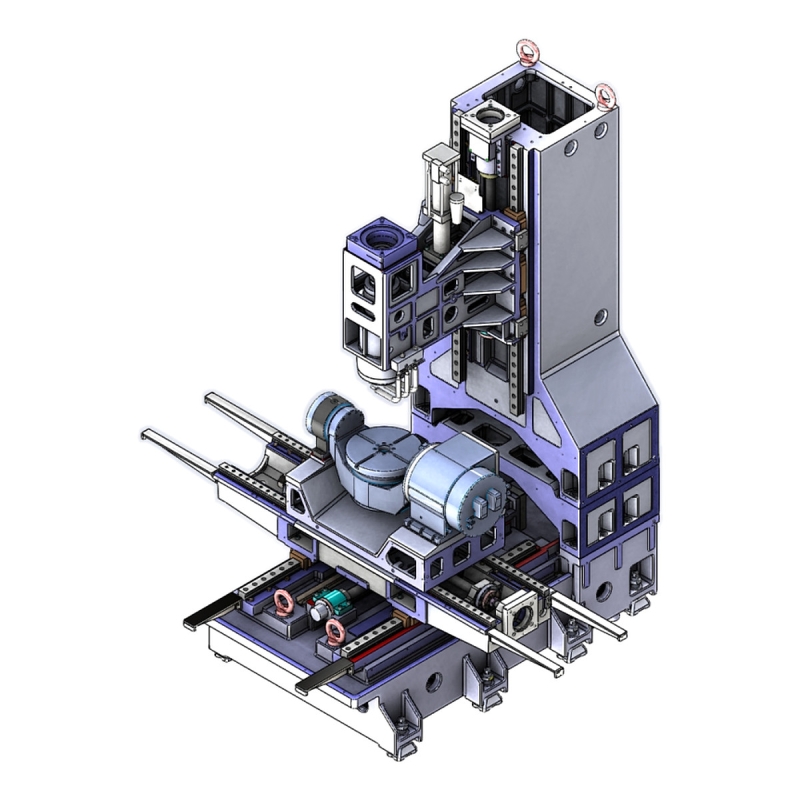


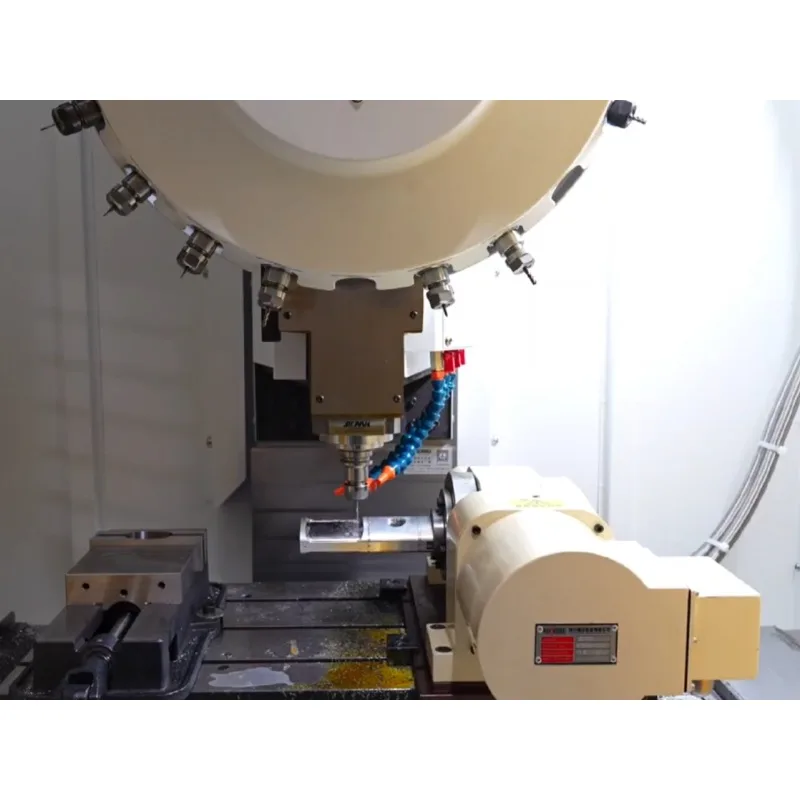
In one sentence: A Φ260 cradle five-axis table plus a directly driven BT40 spindle at 12,000 rpm, travels of 500/510/450 mm and a 24-station arm-type ATC, built for small complex parts up to 60 kg machined on five faces in a single set-up.
On this page
- Φ260 cradle: A axis ±120°, C axis 360°, positioning ±10 arc-sec, repeatability ±5 arc-sec, air braking.
- BT40 directly driven spindle, 12,000 rpm, 7.5 kW; rapids 36 m/min; THK linear rails and ball screws.
- 24-station arm-type tool changer — drilling, milling, tapping and finishing in one set-up.
- Positioning ±0.005/300 mm, repeatability ±0.003/300 mm (JIS); every machine checked with a Renishaw laser interferometer and ballbar, records shipped with the machine.
Φ260
5-axis cradle table
500/510/450
X/Y/Z travel, mm
12,000
spindle rpm · BT40
24
arm-type ATC stations
±120° / 360°
A / C axis travel
4,500
machine weight, kg
The VMC-U260 is Ruian Precision's five-axis vertical machining centre for small, complex, high-value parts. A Φ260 cradle-type trunnion with a directly driven BT40 spindle at 12,000 rpm, travels of 500/510/450 mm and a 24-station arm-type tool changer let you mill, drill, tap and finish five faces in a single set-up — the kind of work found in small impellers, mould inserts, medical components, precision valve bodies and 3C structural parts.
The machine weighs 4,500 kg and occupies 2,296×1,907×2,600 mm; 380 V, 30 kVA power and 6 kg/cm² air are enough to install it. Positioning accuracy is ±0.005/300 mm and repeatability ±0.003/300 mm to JIS, and every machine is checked with a Renishaw laser interferometer and ballbar before shipment.
What parts is this five-axis machine built for?
The U260 is aimed at parts that are small in size, complex in form and required in one set-up. A Φ260 mm table face with 60 kg capacity and a 400 mm part envelope defines the range: small and medium parts, not large mould bases.
Typical work includes small impellers and impeller covers, mould inserts and electrodes, medical components such as bone screws, joint heads and instrument parts, precision valve bodies and fittings, 3C structural and heat-sink parts, and housings for optical or inspection devices. What they share is many faces, many re-clampings and high value per part.
If your parts today run across several three-axis machines with repeated re-clamping, the U260's value is compressing the milling, drilling and tapping of five faces into one set-up — less re-alignment error, less waiting, less handling damage between operations.
The other side of the envelope matters just as much: parts above 400 mm or 60 kg, or heavy roughing that needs large torque, are not this machine's job. A larger vertical or a gantry is the right answer there.
| Suits one set-up, five faces | Better with another machine |
|---|---|
| Small and medium parts within 400 mm and 60 kg | Parts above Φ260 or 60 kg |
| Impellers, mould inserts and electrodes, medical parts, valve bodies, 3C structural parts | Heavy castings or forgings needing large depth of cut and high torque |
| Complex parts with many faces and repeated re-clamping | Long shaft-type turning work (a sliding-head or turn-mill machine fits better) |
How does the cradle give you five faces in one set-up?
The A axis is the tilt axis: ±120° travel, 60 rpm maximum, 259 N·m rated torque, positioning ±10 arc-sec and repeatability ±5 arc-sec. The C axis is the rotary axis: 360° travel, 386 rpm maximum, 122 N·m rated torque, positioning ±10 arc-sec and repeatability 5 arc-sec, with air braking.
A-axis tilt of ±120° covers attitudes from vertical to almost horizontal, so impeller flow channels, holes on inclined faces and deep mould side walls can be brought to the right angle without re-clamping. The C axis turns through 360°, which takes care of rotational parts and circular hole patterns.
Positioning ±10 arc-sec and repeatability ±5 arc-sec are indexing-level figures. With the SYNTEC five-axis control you can run simultaneous five-axis surfacing or 3+2 positional work, depending on how your programmers prefer to work.
Air braking locks the axes after indexing; for heavy cutting it is worth arranging the main cutting force in a well-supported attitude, while finishing passes can run fully simultaneous so the tool follows the surface.
What level are the spindle and feed system?
The spindle is BT40, directly driven, 12,000 rpm, with a 7.5 kW continuous spindle motor, BT40/Φ120 taper and 37–487 mm spindle nose to table distance. Direct drive removes belt slip and lag, so rigidity and response suit small cutters at high speed for surfacing.
X/Y/Z servo motors are 3.1/3.1/3.9 kW, connected directly to the screws. Rapids are 36/36/36 m/min and cutting feed runs 1–12,000 mm/min, so frequent repositioning on small parts does not eat cycle time.
Rails and screws are THK: linear rails X30/Y30/Z35 mm, ball screws X2812/Y2812/Z3212 mm. Spindle and axis bearings are NSK/FAG; the spindle, tool changer and rotary table are Speedcn.
In practice this combination means small cutters (Φ0.5–Φ3 mm) can run at high speed without chatter, step-over on surfaces can be finer, and surface quality comes from the tool and the speed rather than from manual polishing.
How is the tool changer configured?
The magazine holds 24 tools with arm-type (double-arm) tool change and BT40 holders. Drills, end mills, ball-nose cutters, taps and fine boring heads can all be loaded, covering drilling, milling, tapping and finishing inside one set-up.
An arm-type changer has a short, repeatable path and suits small and medium batch work within 24 tools. If your process is unusually concentrated and needs more stations, expansion and options can be discussed at the ordering stage — the contract governs the final configuration.
Which brands are inside the machine?
On a five-axis machine, stability comes largely from the components. The U260 uses SYNTEC for the controller, servo drives and spindle motor, THK for screws and rails, NSK/FAG for bearings, Schneider for electrical parts, AirTAC (Yadeg) for pneumatics, and Speedcn for the spindle, tool magazine and rotary table.
| Component | Brand | Origin |
|---|---|---|
| Controller system | SYNTEC 220MA-5 PLUS | Taiwan |
| Spindle motor | SYNTEC | Taiwan |
| Spindle | Speedcn | Taiwan |
| X/Y/Z servo motors | SYNTEC | Taiwan |
| Spindle bearings | NSK / FAG | Japan / Germany |
| Axis bearings | NSK / FAG | Japan |
| Ball screws | THK | Japan |
| X/Y/Z linear rails | THK | Japan |
| Tool magazine | Speedcn | Taiwan |
| Coolant pump motor | HEYI | China |
| Operating panel | SYNTEC | Taiwan |
| Heat exchanger | IAN GUAN | China |
| Solenoid valves (air) | AirTAC / Yadeg | Taiwan |
| Air circuit parts | AirTAC / Yadeg | Taiwan |
| Electrical parts | Schneider | France |
| Five-axis rotary table | Speedcn | China |
Complete technical specifications
The table below follows the factory parameter sheet item by item. Options are not included; confirm any special requirement with your Ruian contact before ordering.
| Item | Specification | Unit |
|---|---|---|
| Model | VMC-U260 | |
| Control system | SYNTEC 220MA-5 | |
| X-axis travel | 500 | mm |
| Y-axis travel | 510 | mm |
| Z-axis travel | 450 | mm |
| Table face diameter | Φ260 | mm |
| Max. table load | 60 | kg |
| Spindle taper | BT40 / Φ120 | |
| Spindle speed | 12,000 | rpm |
| Spindle nose to table | 37–487 | mm |
| Cradle specification | Φ260–400 | |
| A-axis travel (tilt) | ±120 | ° |
| A-axis max. speed | 60 | rpm |
| A-axis rated torque | 259 | N·m |
| A-axis positioning accuracy | ±10 | arc-sec |
| A-axis repeatability | ±5 | arc-sec |
| C-axis travel (rotation) | 360 | ° |
| C-axis max. speed | 386 | rpm |
| C-axis rated torque | 122 | N·m |
| C-axis positioning accuracy | ±10 | arc-sec |
| C-axis repeatability | 5 | arc-sec |
| Braking | Pneumatic | |
| Rapid traverse | 36 / 36 / 36 | m/min |
| Cutting feed | 1–12,000 | mm/min |
| X/Y/Z linear rails | X30 / Y30 / Z35 | mm |
| X/Y/Z ball screws | X2812 / Y2812 / Z3212 | mm |
| Motor connection | Direct | |
| Number of tools | 24 | pcs |
| Tool change | Arm type | |
| Spindle motor (continuous) | 7.5 | kW |
| Servo motors | 3.1 / 3.1 / 3.9 | kW |
| Power supply | 380 | V |
| Total electrical capacity | 30 | kVA |
| Air supply | 6 | kg/cm² |
| Overall dimensions | 2,296×1,907×2,600 | mm |
| Weight | 4,500 | kg |
| Positioning accuracy (JIS) | ±0.005/300 | mm |
| Repeatability (JIS) | ±0.003/300 | mm |
Cutting parameters for different materials
On a five-axis machine, copying someone else's parameters is the fastest way to scrap parts. The same cutter can need double the rpm depending on overhang and coolant. The values below are normal starting points for a BT40/12,000 rpm spindle — trial-cut them on your own fixturing and freeze the result into the program.
| Material | Spindle speed, rpm | Feed, mm/min | Depth of cut, mm | Notes |
|---|---|---|---|---|
| Aluminium 6061/7075 | 8,000–12,000 | 1,500–3,000 | 0.5–2.0 | High speed, light cuts; watch chip evacuation and coolant |
| Carbon steel 45# | 3,000–6,000 | 600–1,200 | 0.3–1.0 | Drop 20% below the base value for finishing |
| Stainless 304/316 | 1,500–3,000 | 300–600 | 0.2–0.6 | Small depths, more passes, avoid deflection |
| Titanium TC4 | 800–1,500 | 100–300 | 0.1–0.3 | Low speed, small depth, generous coolant |
| Mould steel NAK80/S136 | 2,000–4,000 | 400–800 | 0.2–0.8 | Use ball-nose cutters for surfacing, 0.05–0.15 step-over |
How is accuracy assured and what is checked at acceptance?
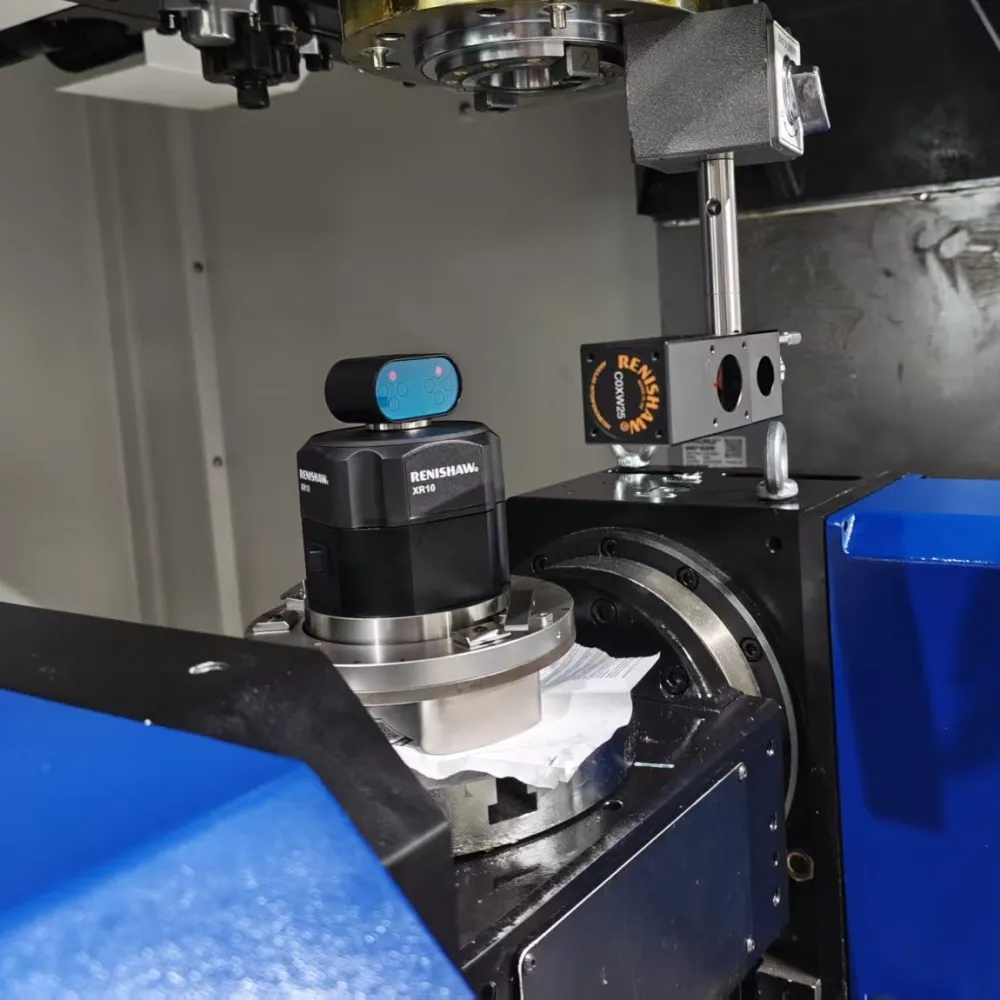
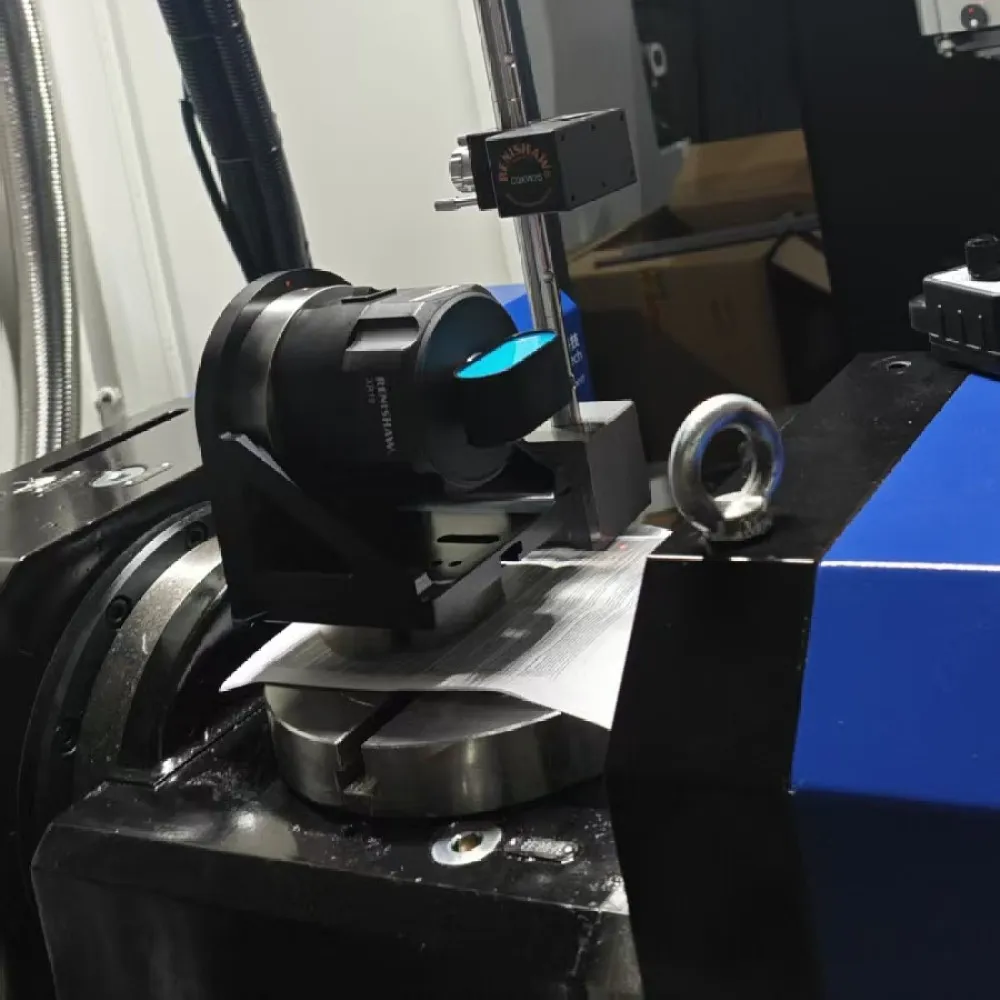
The U260 is accepted to JIS: positioning ±0.005/300 mm, repeatability ±0.003/300 mm; A axis ±10 arc-sec positioning and ±5 arc-sec repeatability, C axis ±10 arc-sec and 5 arc-sec. Every machine is checked with a Renishaw laser interferometer and ballbar, and the records ship with the machine.
Geometry: squareness of X/Y/Z axes, flatness of the table, spindle axis squareness to the table.
Motion: positioning and repeat positioning of each axis, ballbar circular interpolation and backlash.
Five-axis function: A/C positioning and repeat positioning, plus a simultaneous test cut on the agreed sample.
Test cut: a customer part or standard sample is machined and checked for size, roundness and surface finish.
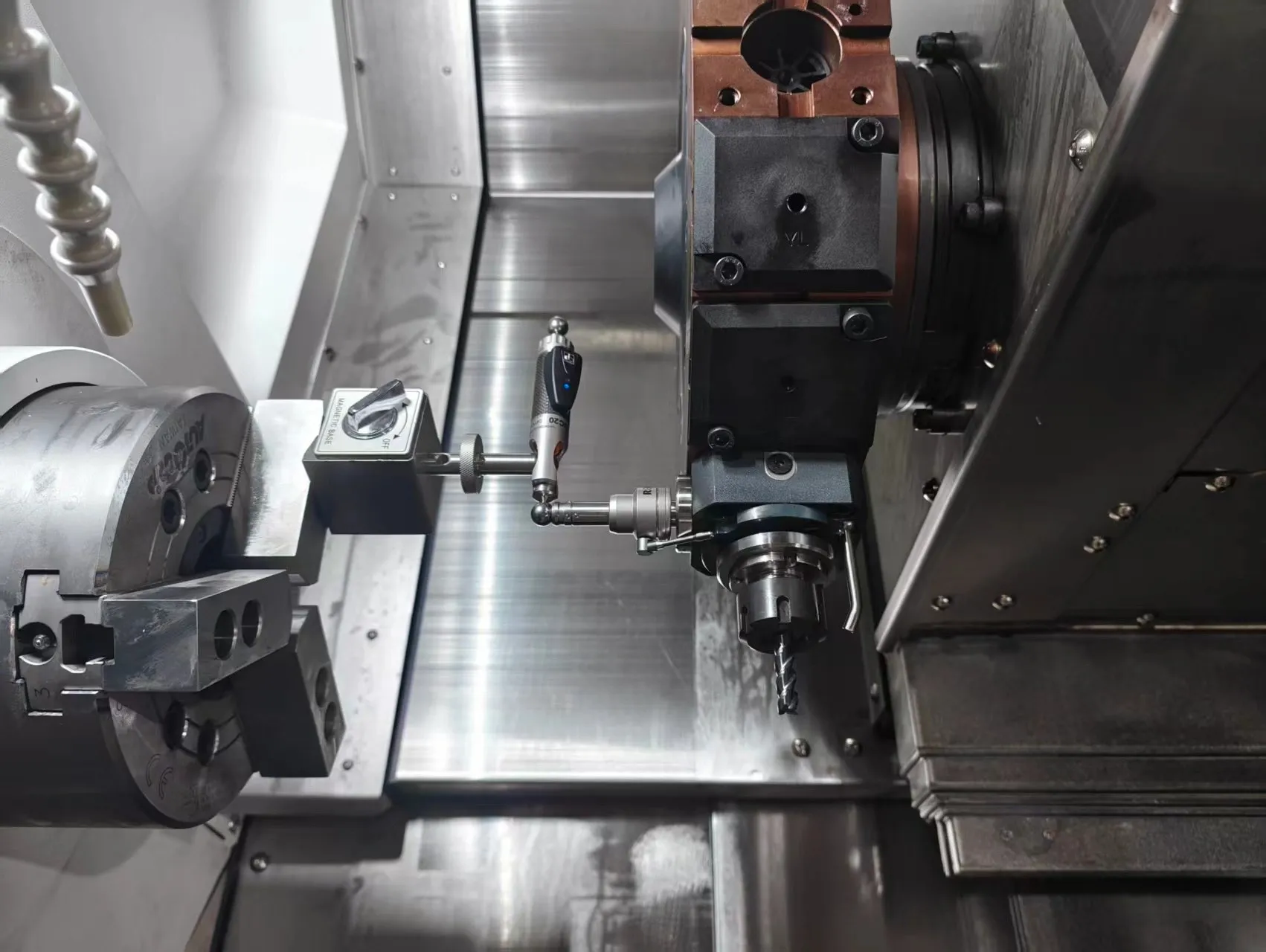
Ballbar test
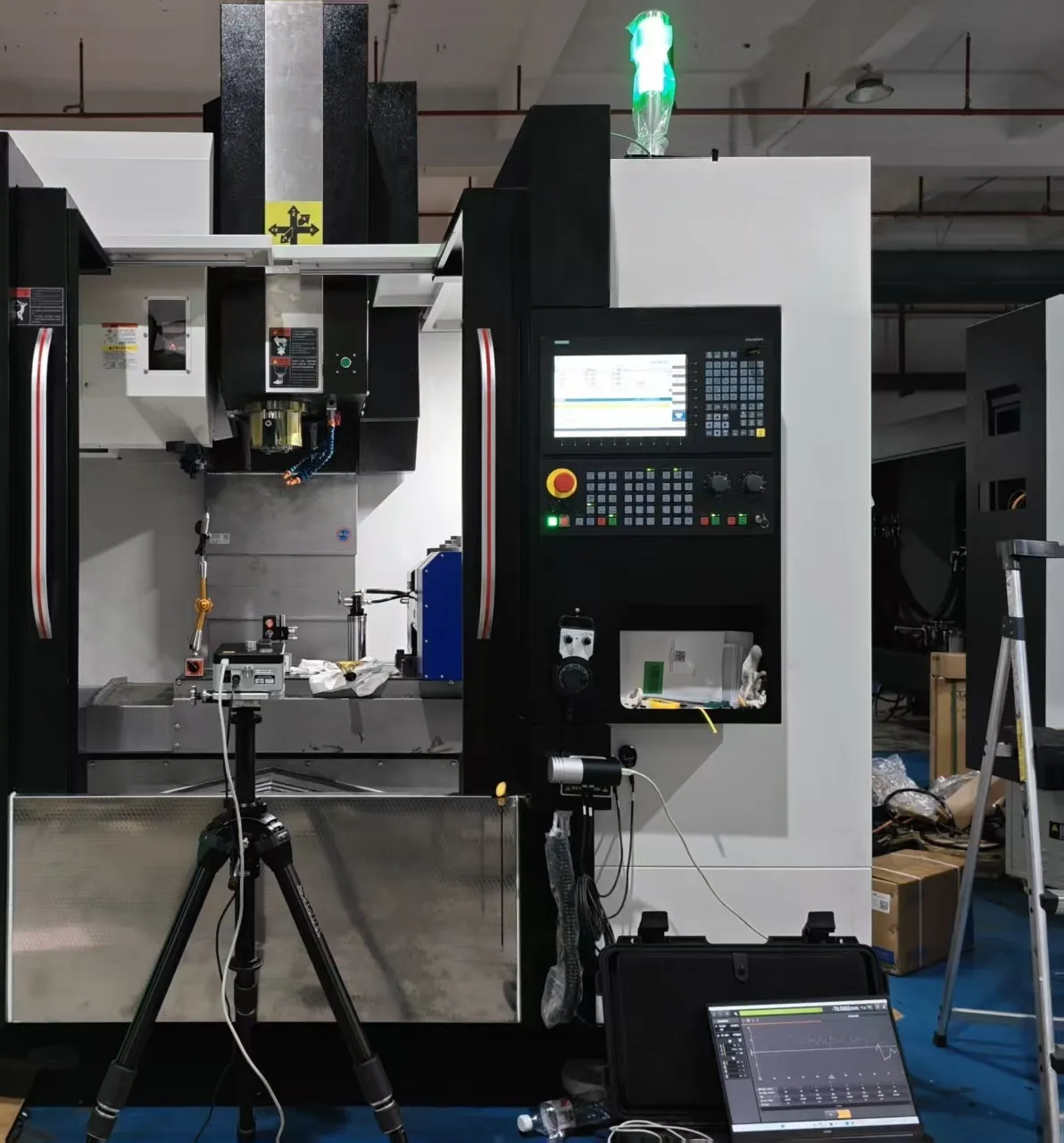
XYZ positioning and repeatability
C-axis positioning and repeatability
B-axis positioning and repeatability
What to send us for a quote and selection
Five-axis buying usually goes wrong when the machine is chosen before the parts. Send us the six items below and we will come back within 1–3 working days with a machine, fixturing and process proposal; complex parts are assessed from the drawings.
For export projects, please also tell us the destination country, voltage, air supply and whether CE or local certification is required — price and lead time are calculated on the actual configuration.
- Part drawings (3D/2D) with critical tolerances, geometric tolerances and surface finish.
- Material and blank: grade, condition, blank size and machining allowance.
- Volume and cycle time: monthly demand, allowed time per part, changeover frequency.
- Accuracy and surface: critical tolerance bands, whether simultaneous five-axis surfacing is needed.
- Site conditions: 380 V / 30 kVA power, 6 kg/cm² air, floor space and lifting access.
- Existing fixturing and tools: reusable holders, tool specs and tool-setting method.
Delivery, installation, commissioning and training
Standard models ship in 5–20 days; custom configurations on request.
Accuracy checks and dry runs are completed before shipment; the machine is exported in a wooden case with the operation manual, parameter sheet and inspection records.
Installation, commissioning and operator training are provided per contract after arrival; one-year warranty excludes wear parts and damage caused by misuse.
Frequently asked questions
Q: Is the U260 a three-axis machine with a rotary table, or a true five-axis machine?
A: The control is a SYNTEC 220MA-5 five-axis system and the A/C axes can interpolate simultaneously. The functions actually enabled are confirmed per order, and a simultaneous test cut is done before delivery.
Q: How large a part fits in the Φ260 cradle?
A: Table face Φ260 mm, load 60 kg, part envelope up to 400 mm. Larger work needs a bigger model.
Q: Will the A axis at ±120° cause interference?
A: ±120° covers vertical to near-horizontal attitudes; actual reach depends on fixturing and tool length. For complex parts, send the 3D model for an interference check first.
Q: Can the C axis rotate continuously?
A: C travel is 360° at up to 386 rpm, which covers rotational parts and circular patterns, and it can interpolate with the A axis for surfacing.
Q: Is air braking enough?
A: Air braking locks the axes after indexing, which is stable for positional work. For heavy cutting, arrange the main cutting force in a well-supported attitude; finishing can run fully simultaneous.
Q: Are 24 tools enough?
A: Drilling, milling, tapping and finishing on small parts usually fit within 24 stations. If your process is more concentrated, expansion can be discussed — the contract governs.
Q: What power and air do I need?
A: 380 V supply, 30 kVA total electrical capacity, 6 kg/cm² air.
Q: What about floor space and lifting?
A: 2,296×1,907×2,600 mm and 4,500 kg: allow for foundation and lifting requirements when planning the bay.
Q: What is the lead time?
A: Standard models ship in 5–20 days; custom configurations on request.
Q: Can I add a tool setter, automation or a fourth axis?
A: Options can be discussed for your parts; configuration and price are set by contract, and unconfirmed options are not written into the standard specification.
About Dongguan Ruian Precision Machinery Co., Ltd.
Location: Hengli, Dongguan, Guangdong, China
Main business: complete machines plus tool holders, power tool holders and machine accessories; selection, fixture and process support, installation, commissioning and training
Product lines: turn-mill machines, turret lathes, gang-tool lathes, flat-bed lathes, Swiss-type sliding-head lathes, vertical / five-axis / horizontal / gantry machining centres
Website: www.ruiancnc.cn
Phone / WhatsApp: +86 13929438020
Specifications current as of November 2026; subject to the factory parameter sheet and the contract.
Talk to us about your parts
Dongguan Ruian Precision Machinery Co., Ltd.
Website: www.ruiancnc.cn
Phone / WhatsApp: +86 13929438020
VMC-U260 FAQs
Six questions buyers ask most about this model; answers follow the machine's own specification.
Q1: What part size does VMC-U260 handle?
A: Ø260 mm trunnion, A ±120°, C 360°, travels 500/510/450 mm, with parts up to about 60 kg. Anything larger than Ø260 or heavier than 60 kg should move to TW-400 or above.
Q2: Why does a five-axis cost more than a three-axis with the same table, and is it worth it?
A: The difference is the trunnion and the five-axis system. One clamping covers five faces and removes the error and labour of repeated re-fixturing; for impellers, mould inserts, electrodes, valve bodies and 3C parts the cost per part is usually lower than spreading the job over several three-axis machines.
Q3: Is a BT40 direct-drive 12,000 rpm spindle enough?
A: Yes for finishing and routine milling of steel and aluminium with small and medium cutters. The Ø260 table targets small-part multi-face precision, not heavy cutting; deep cuts in castings or forgings belong on TW-650 or TW-800.
Q4: How should the 24-tool arm magazine be laid out?
A: Follow the process: face mill, end mill, drill, tap and finishing cutter each keep a regular pocket, the rest for back-up and special tools. Five-axis work re-fixtures often, so keep common tools in adjacent pockets to shorten non-cutting travel.
Q5: How is accuracy guaranteed and checked at acceptance?
A: Three-axis positioning ±0.005/300 mm, with the test record shipped. At acceptance, cut a circle and a square on a standard block, measure roundness and five-face perpendicularity, then check A/C return repeat; sign off when all three match.
Q6: Which control is fitted and how hard is programming?
A: SYNTEC 220MA-5 PLUS, supporting simultaneous five-axis and 3+1 / 3+2 working, with post-processors available for mainstream CAM. Training is included and an existing programmer typically runs the machine independently within 3-5 days.
Delivery: standard models ship in 5-20 days; custom builds on request.
Next:
None