


CNC Lathe Quotation, Lead Time and Shipping: 10 Buyer Questions
A 20% gap between two quotes for the same model is rarely about being cheaper. It is configuration, voltage, shipping terms and training scope. Align those four first, then compare prices.
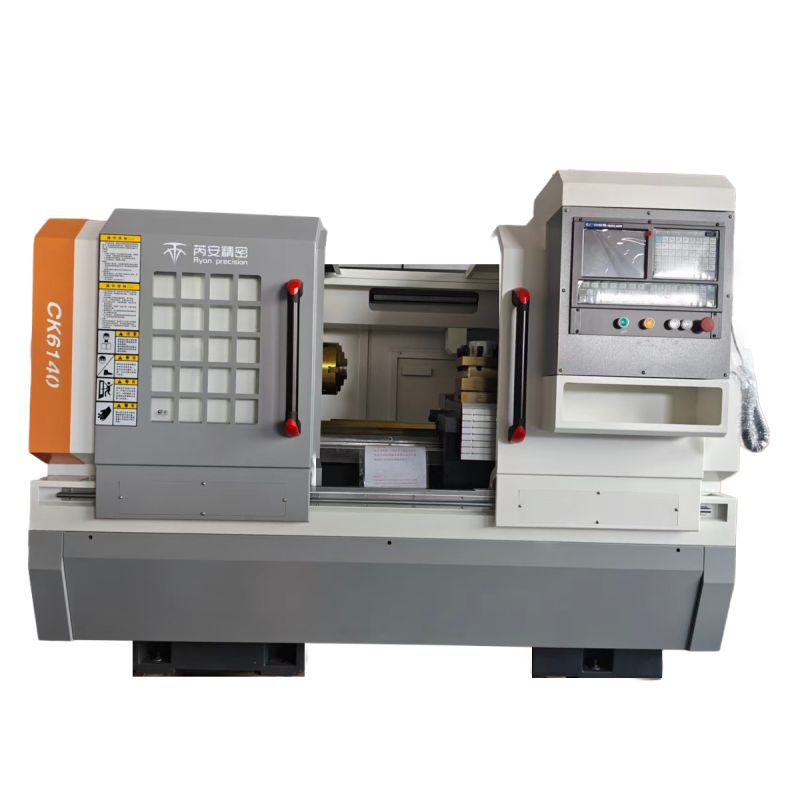
CK-6140 flat-bed lathe front view
Buyers ask two numbers first: how much and how long. Behind both numbers sit seven or eight variables. These ten questions follow the order from quotation to receipt.
Machine figures come from the product tables on this site; commercial terms describe our normal practice and the contract governs each order.
Q1: Why do quotes for the same model differ so much?
Check four items first: turret or holder configuration, chuck size, voltage and frequency, and whether freight and training are included. The same HMS-320MY costs differently with more live holders, an 8-inch instead of 6-inch chuck, or a 60 Hz electrical package for an export market. If a quote does not state the configuration, ask for the configuration list before comparing price.
Q2: What is normally included and what is not?
Normally included: the machine, standard accessories, the standard turret or holder set, and the basic operation manual. Normally not included: lifting and positioning, foundation and air/hydraulic preparation, tooling and coolant, freight and insurance, and travel for on-site training. Whatever is excluded must be written on the quotation, not agreed verbally.
Q3: How should lead time be counted?
From the day the deposit is received and the technical configuration is confirmed — not from the day of the inquiry. Machines with a sub-spindle, Y axis or non-standard holders need configuration confirmation time, and export machines need wooden packing and customs preparation. Work backwards from your target start-up date instead of discovering a two-week gap at booking.
Q4: How is export voltage and frequency decided?
From the customer's actual shop supply, not from habit. 380 V / 50 Hz is common; 60 Hz markets need the motor and electrical components confirmed separately. Getting this wrong is the most expensive mistake: correcting it after arrival means rebuilding the cabinet. Ask the customer for voltage, frequency and phase in writing before the order.
Q5: FOB, CIF or DDP?
FOB suits buyers with their own customs capability. CIF covers sea freight and insurance only; clearance and inland transport remain with the buyer. DDP is door-to-door including duty and local delivery — the highest price and the least work. Choose by whether the buyer holds an import licence, not by which line looks cheaper.
Q6: What matters in wooden-case packing?
Three things: centre of gravity marked, moisture protection, and lifting access. The centre of gravity sits toward the spindle end, so mark lifting points and the gravity line on the case; for full-container or flat-rack shipment the base needs both forklift and sling access. Send packing photos for approval before shipment; it is cheaper than an argument at the port.
Q7: How are installation and training arranged?
Normally two stages: remote guidance plus on-site training. On arrival, follow the commissioning manual for leveling, air and hydraulics, and the dry run; after the first part is good, train on operation and programming. Training days depend on machine complexity; sub-spindle and Y-axis machines need one day more. Keep attendance and training records for later troubleshooting.
Q8: Should spare parts be ordered with the machine?
Yes, three groups on the first order: wear seals, holder clamping parts, and common electrical spares. Unit prices are low, but the cost of waiting for a part is far higher than the part. Holder spares follow the machine interface (BMT45 for HMS-320MY, BMT55 for the HMS-550 series); check the interface before ordering instead of relying on the word “universal”.
Q9: How is warranty scope defined?
Normally non-human quality issues of components are covered; overload cutting damage, missed maintenance, third-party modification and consumables such as tooling, coolant and filters are not. “Overload” is where disputes concentrate, which is why the cutting-parameter records kept at acceptance matter — they are the evidence.
Q10: What payment structure is safest?
Deposit plus balance before shipment is common, with staged payment for large orders. The structure that protects both sides ties each payment to a verifiable event: configuration confirmed, pre-acceptance, shipment, arrival, acceptance. The more specific the milestone, the fewer the disputes.
| Model | Max bar | Spindle bore | Chuck | Typical orders |
|---|---|---|---|---|
| HMS-320MY | Φ46 | Φ56 | 6 inch | Small parts, short parts, high mix |
| HMS-550MY | Φ52 | Φ65 | 8 inch | Medium discs and shafts |
| CK-6140 | Confirm with chuck and feeder config | Φ66 | Per config | Long shafts, one-off batches |
| CK-6150B | Confirm with chuck and feeder config | Φ82 | Per config | Large-bore long shafts |
The more specific the quotation, the fewer the arguments later. Configuration, voltage, freight and training in writing is worth more than two points off the price.
Related pages
Contact us
Tel: +86 13929438020
Email: Vince@ruiancnc.com
Address: Floor 1, Building 7, No. 8 Tiankeng Gaoxin Road, Hengli Town, Dongguan, Guangdong, China
Website: ruiancnc.com
Next:
None
Related News
- -HMS-750 in Service: 740 mm, Φ52 Bar and Tailstock, 10 Questions
2026-11-24 - -QPR-36L or HMS-750: How to Split the Work, 10 Selection Answers
2026-11-24 - -Swiss-Type 125 in Service: Bushing, Sub-Spindle, 10 Questions
2026-11-24 - -QPR-46L: 10 Questions on Φ46 Bar, 20×20 Tooling and Cycle Time
2026-11-23 - -VMC-850L, 1165 or 1380: 10 Questions on Picking a VMC
2026-11-23 - -HMS-550MY: 10 Questions on Y-Axis ±50 mm and Tailstock
2026-11-23 - -BMT45 vs BMT55 Live Tooling: 10 Questions Before You Order
2026-11-22 - -Turn-Mill Commissioning: 10 Questions from the Shop Floor
2026-11-22 - -CNC Lathe Quotation, Lead Time and Shipping: 10 Buyer Questions
2026-11-22 - -What Are the Benefits of Turn-Mill Machining?
2024-05-15
